
About
BULGOLD Inc. is a Canadian-based company focused on the exploration of epithermal gold projects in Eastern and Central Europe. The company's strategy aims to discover and develop gold projects with potential for high-grade, good-metallurgy, low-sulfidation epithermal gold mineralization. Its principal projects include the Lutila Gold Project in Central Slovakia and the Kostilkovo and Kutel Gold Projects in southeastern Bulgaria.
Verified company data
- Cash position
- Exact figure N/A
- Shares outstanding
- 49,132,335
- Fully diluted shares
- 80491386
- Mineral resource
- To Be Established.
- Projects
- ["## Kutel Gold Project\n\n[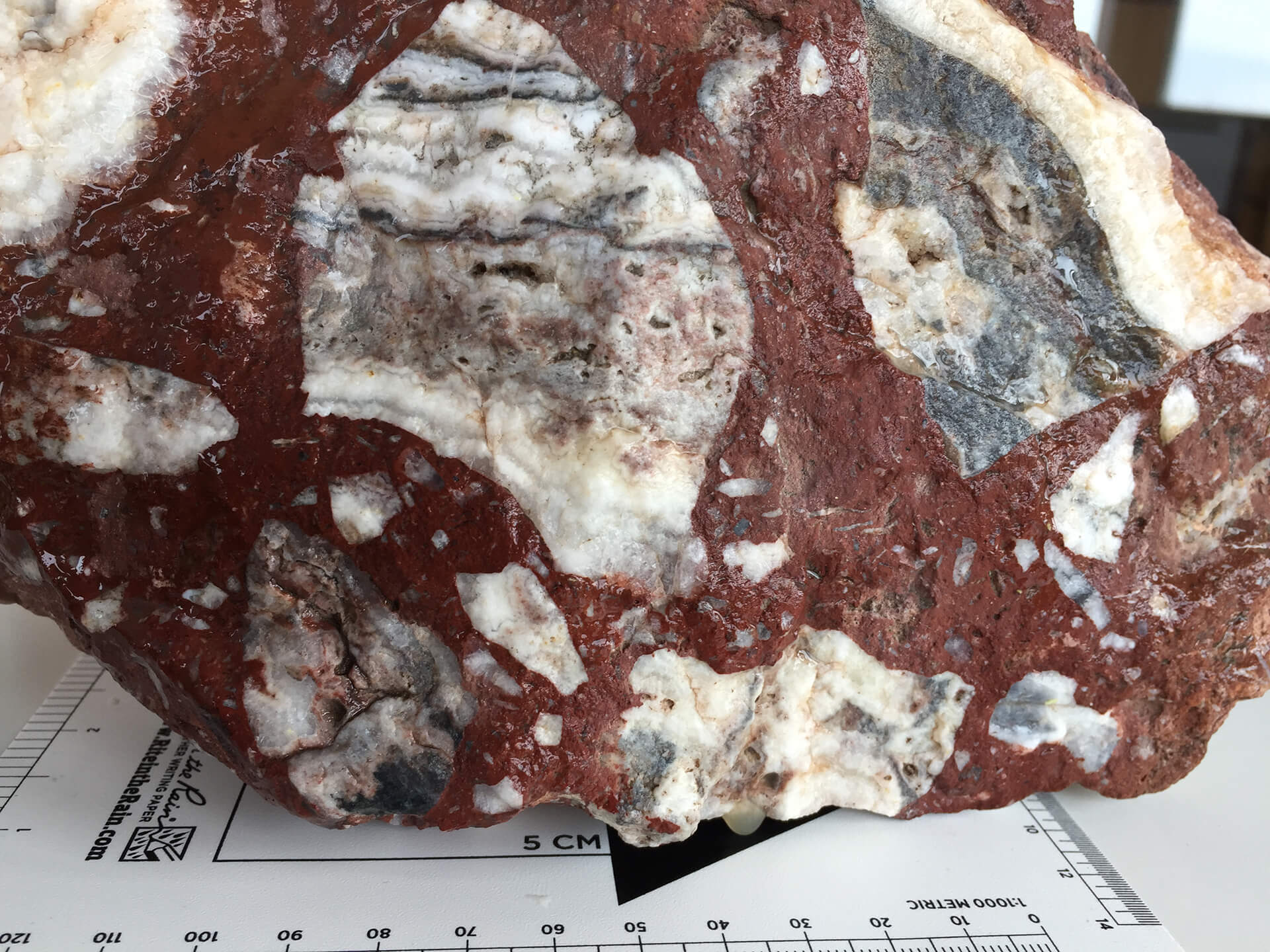](https://www.bulgold.com/projects/kutel/)\n\n## Kostilkovo Gold Project\n\n[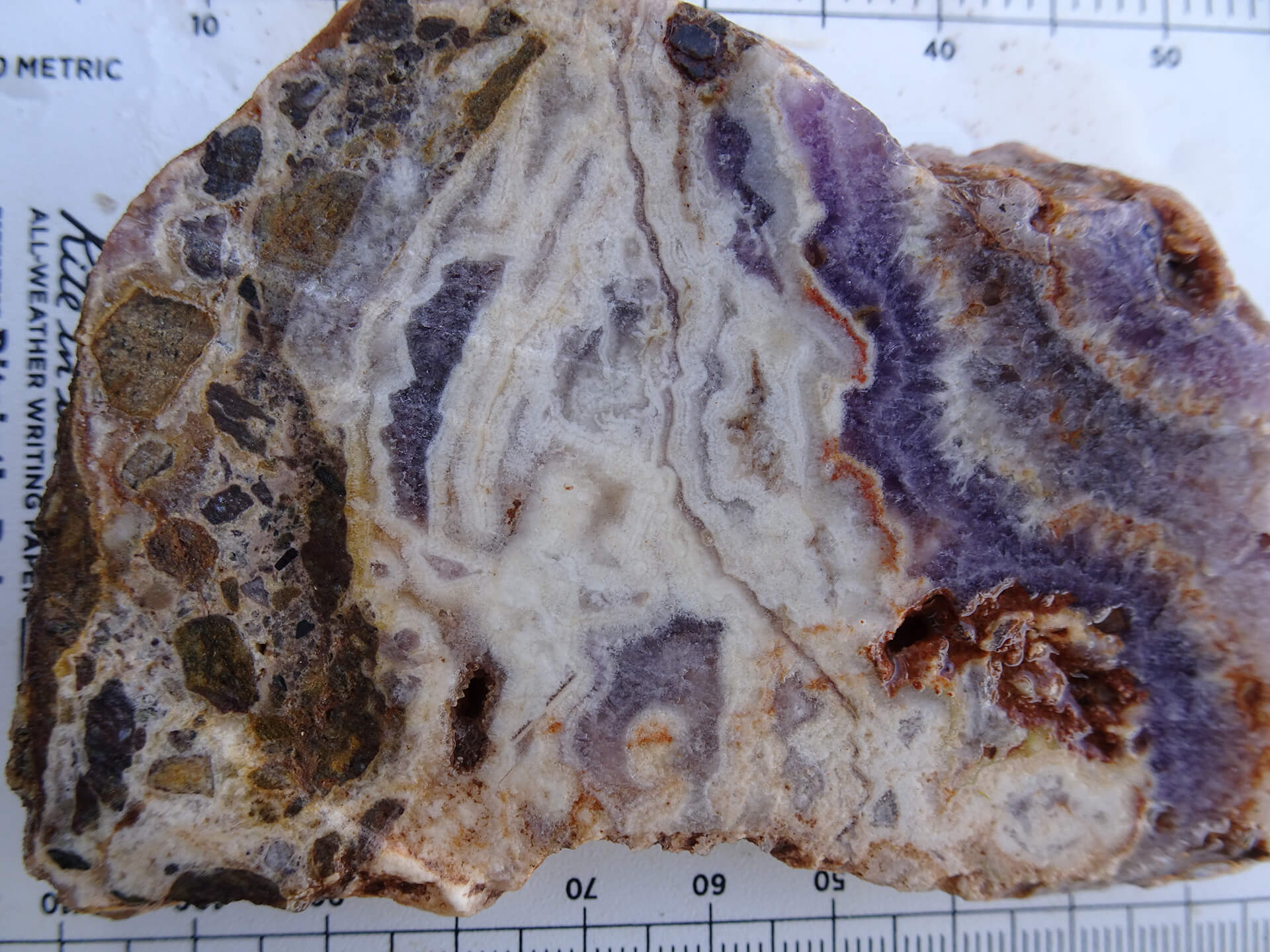](https://www.bulgold.com/projects/kostilkovo/)\n\n## Lutila Gold Project\n\n[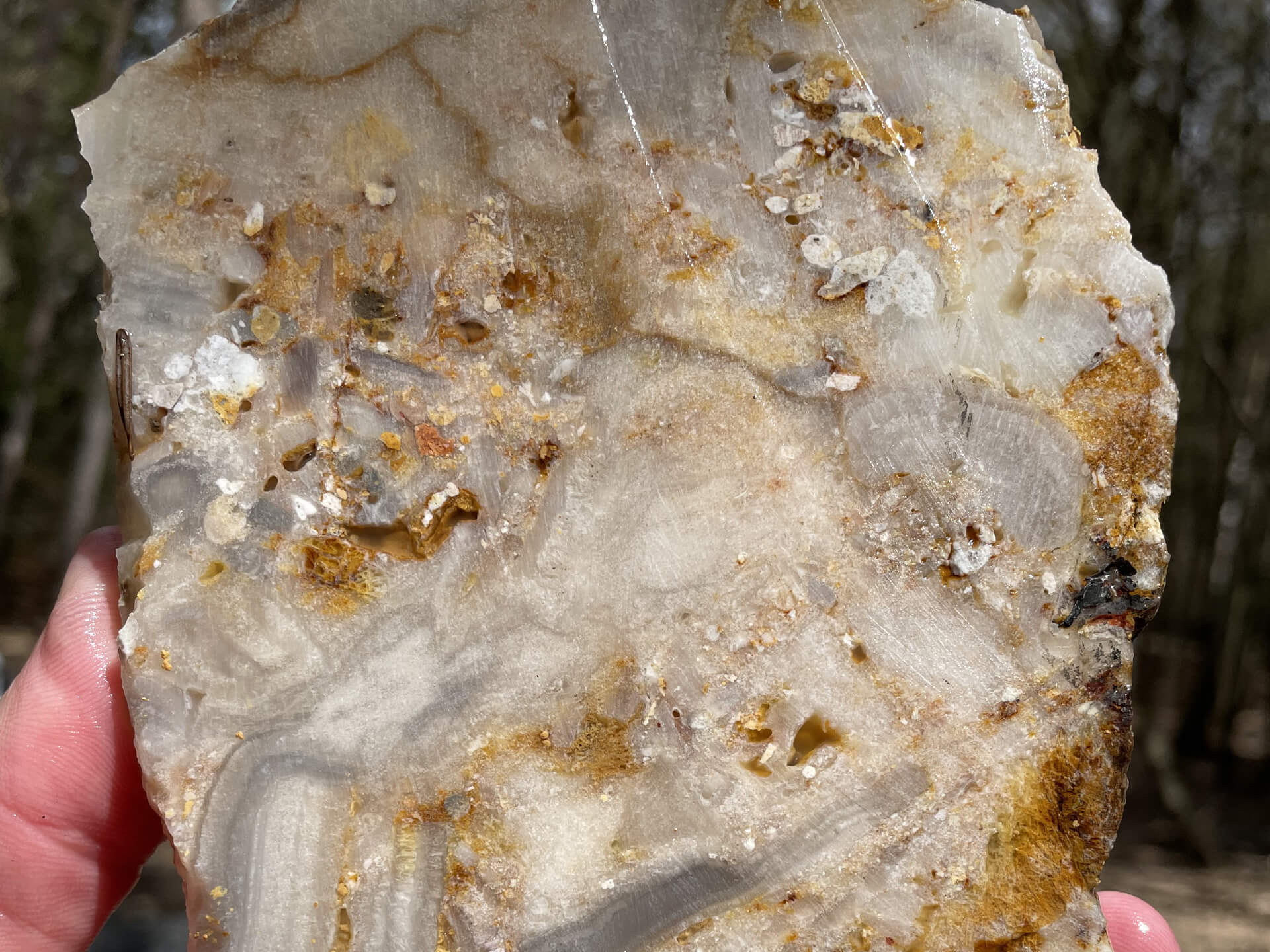](https://www.bulgold.com/projects/lutila/)\n\n**BULGOLD DISCOVERS EPITHERMAL QUARTZ VEINS AT SURFACE WITHIN THE SINTER FIELD ON THE LUTILA GOLD PROJECT AND COMPLETES 2024 DRILLING PROGRAMME**\n\n**Toronto, ON. November 14, 2024**– **BULGOLD Inc. (TSXV: ZLTO)** (the “Company” or “BULGOLD”) is pleased to announce that it has received all outstanding assay data relating to the Lutila Gold Project (the “Property”). This information has now been validated and incorporated into the Company’s database. The Lutila exploration licence covers an area of 32.2km **2** and is prospective for quartz-adularia epithermal gold mineralisation.\n\n1. **Highlights**\n\n- **Drill hole CVDD001, drilled within the North East Block, intersected multiple low-grade gold intervals within rhyolite flow dome rocks; best interval of 18m @ 0.14g/t Au, 1,071g/t As & 167g/t Sb (from 33m).**\n\n- **Drill holes RRDD001 and RRDD002, drilled from the same drill pad within the Sinter Field failed to intersect any significant gold intervals; there were some indications of hydrothermal activity i.e. silicified pyroclastic rocks with disseminated pyrite.**\n\n- **Persistent prospecting activity led to the discovery of epithermal quartz vein material on the highest peak within the Sinter Field; located 2.7km north along Rhyolite Ridge from RRDD001 and RRDD002 and 1.7km south west from CVDD001. This is the first time that epithermal quartz veins have been recognised within the Sinter Field and validate the Company’s exploration model.**\n\n- **Additionally, 500m north east and along strike from the epithermal quartz veins the Company discovered an area of ancient mining located at the end of the ridgeline. A slot has been mined into the ridge face which measures 70m in width and 40m in height with the corresponding waste dump measuring approximately 200m in length and up to 50m wide. The waste dump is defined by an historic antimony soil anomaly. Rocks within the ancient mining area are predominantly strongly silicified ± chalcedonic veins, flow banded rhyolite and likely represent exposure of the upflow zone that the Company has been exploring for within the Lutila Gold Project.**\n\n- **Mapping and assessment of all sinters within the Sinter Field revealed that sinters located on Rhyolite Ridge (at the highest elevations) reflect the highest temperatures of formation and therefore proximity to the “hot springs” or “outflow zones” which continues to support the view that the 5km-long Rhyolite Ridge is one of the primary exploration targets on the Property.**\n\n- **The Company commenced its maiden drilling programme on the Property less than a year after incorporating a local subsidiary (Stredné Slovensko s.r.o.), demonstrating that the Company’s policy of proactive engagement with stakeholders results in a greater understanding of the modern gold exploration process.**\n\n- **The Property is located 5km south, along strike and within the same volcanic depression that hosts the historic quartz-adularia Kremnica gold mine (current JORC (2012) mineral resource estimate of 2.7Moz Au2). Historic gold production is estimated by Finka (1995) to be 1.48Moz2.**\n\n- **Exploration target: underground, high-grade gold (Au) ± silver (Ag) quartz veins.**\n\n_2This is not a mineral reserve or mineral resource that has been prepared in compliance with the requirements of National Instrument 43-101_.\n\n_“Source: Metals Tech Limited, ASX Release, 8 th May 2023 ( [https://wcsecure.weblink.com.au/pdf/MTC/02663482.pdf](https://wcsecure.weblink.com.au/pdf/MTC/02663482.pdf))”_\n\n**Quote from the President & CEO, Mr Sean Hasson:**\n\n_“The discovery of strongly antimony anomalous epithermal quartz veins together with the nearby area of ancient mining represent a pivotal moment in the exploration of the Lutila Gold Project._\n\n_The Company has drill tested Rhyolite Ridge 2.7km south of this location and used the occurrence and distribution of outcropping sinters to guide such drilling efforts. It is now clear to the Company that future exploration drilling should take place within this +1,000m portion of Rhyolite Ridge where epithermal quartz veins are found at surface together with ancient mining activity which provide direct evidence for the presence of epithermal veins at depth beneath the ridgeline within the upflow zone._\n\n_The Lutila Gold Project is located favourably between two of the largest Au-Ag epithermal systems within the Central Slovakia Volcanic Field, the Kremnica gold deposit and the Banska Štiavnica gold-silver ore field, which, collectively, have produced significant amounts of precious metals over many centuries._\n\n_At BULGOLD we believe that the art of discovery is defined by subtlety, and one does not need to be reminded that the Fruta del Norte gold mine was discovered by drilling beneath a surface antimony anomaly to reveal the 300m long high-grade core of the deposit. With that in mind, the Company is evaluating a number of options to progress the discovery process on the Lutila Gold Project.’_\n\n2. **Exploration Drilling**\n\nThree diamond drill holes were completed by the Company as part of its 2024 exploration programme. CVDD001 was drilled within the North East Block to test the Čertov vrch target area and RRDD001 and RRDD002 were subsequently drilled from the same drill pad within the Sinter Field on the western side of Rhyolite Ridge. A total of 1,615.8m was drilled, sampled and assayed; individual drill hole details are outlined below:\n\n| | | | | | | | |\n| --- | --- | --- | --- | --- | --- | --- | --- |\n| **Hole No.** | **Grid Name** | **X** | **Y** | **Z** | **Dip** | **Azimuth** | **Depth** |\n| CVDD001 | UTM35N | 344666 | 5392610 | 594 | -67.4 | 091 | 515.4 |\n| RRDD001 | UTM35N | 342611 | 5388686 | 519 | -66.7 | 091 | 600 |\n| RRDD002 | UTM35N | 342618 | 5388688 | 519 | -50.3 | 126 | 500.4 |\n\nTable 1. Exploration drill hole information.\n\n**CVDD001**\n\nGold anomalous intervals from CVDD001, targeting beneath the Čertov vrch prospect area are outlined below:\n\n- 18m @ 0.14g/t Au, 1,071g/t As, 167g/t Sb (from 33m) \n\n- 5m @ 0.13g/t Au, 988g/t As, 96g/t Sb (from 126m) \n\n- 6m @ 0.13g/t Au, 300g/t As, 30g/t Sb (from 358m) \n\n\\*2m minimum composite length, 2m maximum internal dilution, 0.1g/t Au cut-off; the Company considers this to represent a ‘geological cut-off’ which shows that gold is present in rhyolite volcanic rocks at anomalous values.\n\nGeologically, CVDD001 intersected the following volcanic units:\n\n- 0 – 23m: Feldspar-phyric rhyolite tuff.\n- 23 – 51m: Rhyolite pyroclastic breccia.\n- 51 – 340m: Flow banded rhyolite with steep, wispy, veinlets of chalcedony (± quartz) + pyrite approximately one per metre from 51 – 305m, after which the veinlets become carbonate + pyrite dominant from 305 – 340m.\n- 340 – 481m: Flow banded feldspar-phyric rhyodacite with steep carbonate + pyrite veinlets dominating on a regular basis; pyrite also replaces hornblende phenocrysts and feldspar phenocrysts are variously altered to yellow/green smectite clays; strong to intense propylitic alteration.\n- 481 – 488m: Rhyolite volcanic breccia, matrix supported with non-flow banded clasts of rhyodacite to dacite; feldspar phenocrysts are altered to green smectite clays and hornblendes have been replaced by pyrite and locally converted to iron oxides with disseminated pyrite within a red fine-grained matrix.\n- 488 – 515.4m: Dacite with >70% feldspar phenocrysts altered to green smectite clays with accessory hornblende ± biotite commonly altered to iron oxides, quartz phenocrysts, when present, generally show corroded rims. Steep carbonate + pyrite veinlets, together with disseminated pyrite in the matrix increase from 502m.\n\nOperationally, core recovery was good and averaged 99%. Drilling rates were reasonable; however, mechanical issues with the drill rig resulted in significant drilling downtime which led to the Company deciding to halt the drill hole at 515.4m rather than continuing drilling and risk losing the HQ drill string. The drill hole could be re-entered at a future date.\n\n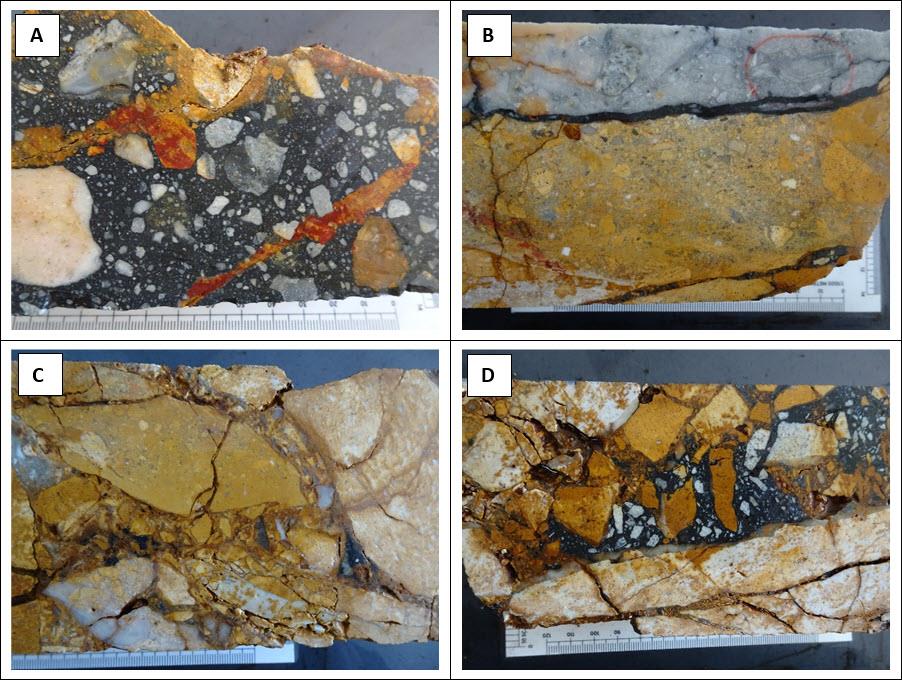\n\nFigure 1. Examples of gold mineralised drill core from CVDD001; (A): hydrothermal breccia containing disseminated marcasite and clasts of quartz vein (upper left), chalcedonic quartz fragments and rhyolite volcanic rock (35.6m); (B): chalcedonic quartz vein with lattice bladed quartz textures (circled in red) within rhyolite rock (36.2m); (C): brecciated rhyolite rock with chalcedonic quartz matrix infill with minor disseminated and blebby marcasite (38.1m); (D): hydrothermal breccia containing chalcedonic quartz fragments with disseminated marcasite in rhyolite volcanic rock (51m).\n\n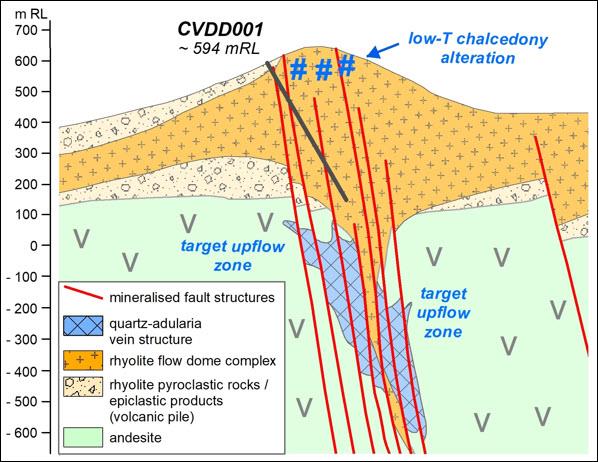\n\nFigure 2. Schematic geological cross section showing drill hole CVDD001 in relation to the gold mineralised quartz veins believed to be deposited within an upflow zone beneath the ridgeline that the Company was targeting.\n\n**RRDD001 & RRDD002**\n\nThe drill site was selected to test the middle of the 4km long, north-south trending portion of Rhyolite Ridge that is surrounded by sinters, which represent the surface expression of upflow zones. The Company believed that this location was representative in terms of testing the potential of Rhyolite Ridge for mineralised epithermal veins at depth beneath the ridgeline, where we believed they may have been deposited within an upflow zone.\n\nGeologically, RRDD001 intersected the following volcanic units:\n\n- 0 – 3m: Sinter\n- 3 – 23m: Epiclastic rocks, coarse volcanic sandstones, fine grained tuff and lithic tuffs with weak bedding and grading together with devitrification textures after volcanic glass.\n- 23 – 45m: Block and ash pyroclastic flow.\n- 45 – 64m: Epiclastic rocks, polymictic volcanic sandstone to conglomerate composed of rhyolite material.\n- 64 – 170.8m: Block and ash pyroclastic flow.\n- 8 – 289m: Epiclastic rocks, volcaniclastic conglomerate and sandstone with intercalated tuff bands with spherulitic textures.\n- 289 – 411m: Block and ash pyroclastic flow, matrix supported with clasts of flow and non-flow banded rhyolite; from 370m the ash/glass matrix is altered to yellow/green zeolite and/or smectite clays.\n- 5 – 462m: Epiclastic rocks, volcaniclastic conglomerate and coarse sandstone with tuff bands.\n- 462 – 481m: Block and ash pyroclastic flow with minor green zeolite and/or smectite clays.\n- 481 – 485.3m: Silicified block and ash pyroclastic flow with disseminated and blebby marcasite in the matrix.\n- 3 – 600m: Lacustrine sedimentary rocks, grey marls, black mudstones, grey, partly calcareous sandstones, green siltstones and lesser coarse sandstone composed of rounded quartz, limestone (marble?) and minor volcanic derived clasts.\n\nFollowing the completion of RRDD001, the geological model was revised to incorporate the presence of lacustrine sedimentary rocks within the stratigraphy which would likely act as an aquitard within the upflow zone and to reflect the greater thickness of the volcanic pile (rhyolite pyroclastic/epiclastic products). The Company was encouraged by the silicification with associated marcasite of the pyroclastic flow immediately above the contact with the lacustrine sedimentary rocks and also the smectite alteration of the matrix within the pyroclastic flows. As such, it was decided to collar RRDD002 at a shallower angle from the same drill pad so as to cross the ridgeline and confirm (or not) the presence of an upflow zone beneath this portion of Rhyolite Ridge.\n\n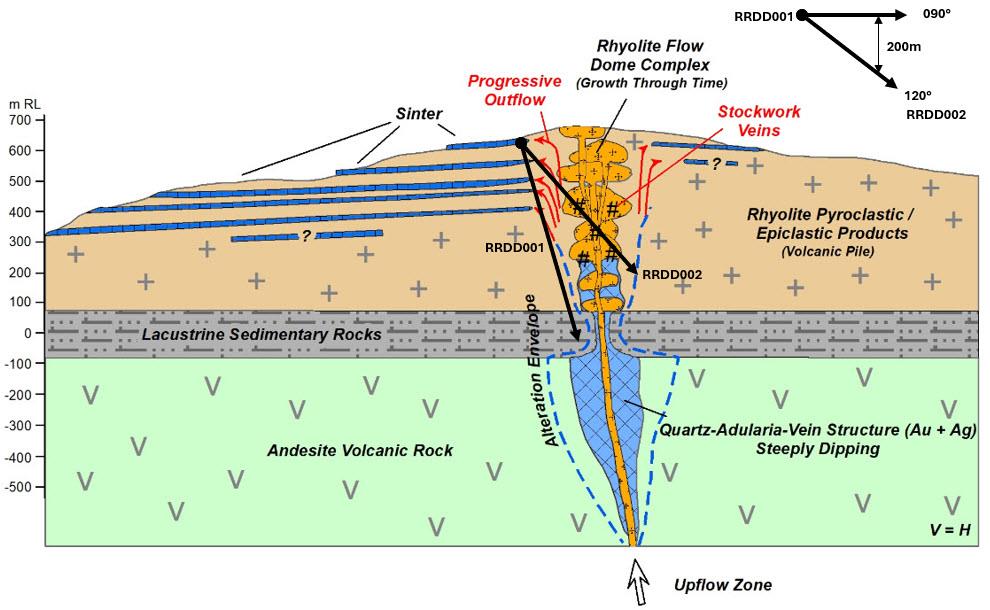\n\nFigure 3. Schematic representation of the Company’s revised geological model for Rhyolite Ridge following the completion of RRDD001.\n\nGeologically, RRDD002 intersected the following volcanic units:\n\n- 0 – 5.3m: Sinter.\n- 3 – 24.5m: Epiclastic rocks, tuff, coarse volcanic sandstone composed of rhyolite rock.\n- 5 – 57m: Block and ash pyroclastic flow.\n- 57 – 81.6m: Epiclastic rocks, coarse, polymictic, volcanic sandstone and conglomerate.\n- 6 – 206.2m: Block and ash pyroclastic flow.\n- 2 – 428.1m: Epiclastic rocks, coarse volcanic sandstone/conglomerate/breccia composed of lithic rhyolite clasts with tuff layers.\n- 1 – 500.4m: Block and ash pyroclastic flow.\n\nRRDD002 failed to show evidence of an upflow zone below this portion of Rhyolite Ridge.\n\n1. **Epithermal Quartz Veins within the Sinter Field**\n\nPersistent prospecting following the completion of exploration drilling led to the discovery of epithermal quartz veins on and just below the equal highest peak (687mRL) within the Sinter Field. The quartz vein material is located 60m vertically above and 1km north east from the nearest outcropping sinter. Sinters form at the paleo-water table, while epithermal quartz veins form beneath the paleo-water table.\n\n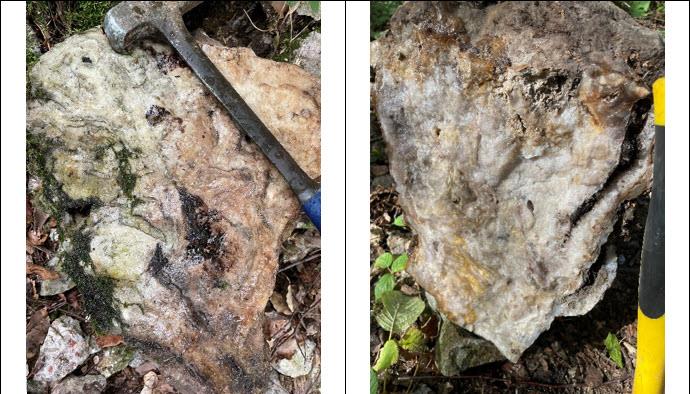\n\nFigure 4. Field images of the epithermal quartz vein pieces located at the equal highest peak within the Sinter Field.\n\nThe epithermal quartz vein fragments represent the high-level expression of an upflow zone located beneath this +1,000m portion of Rhyolite Ridge, where the overall strike of the ridge abruptly changes from a north-south to a north-east orientation. The vein pieces are dominated by low temperature, low fluid-flux textures and are commonly coarsely banded chalcedonic quartz with zones of quartz lattice bladed textures which indicate that boiling has occurred. Minor included fragments of rhyolite rock within the vein pieces clearly indicates that the veins formed within rhyolite rock. They are strongly anomalous for antimony (average of 228g/t Sb) with very low levels of Au, Ag and As and correlate well with the historic Sb soil geochemistry.\n\nAdditionally, 500m north east and along strike from the epithermal quartz veins the Company discovered an area of ancient mining located at the end of the ridgeline. A slot has been mined into the ridge face which measures 70m in width and 40m in height with the corresponding waste dump measuring approximately 200m in length and up to 50m wide. The waste dump is defined by a historic antimony soil anomaly. Rocks within the ancient mining area are predominantly strongly silicified ± chalcedonic veins, flow banded rhyolite and likely represent exposure of the upflow zone that the Company has been exploring for within the Lutila Gold Project (Figure 6).\n\nHistoric gold exploration within the Lutila Gold Project has been ongoing for centuries given its location immediately south and along strike from the Kremnica gold deposit, which has been mined for approximately 1,000 years, and in that time, this is the first recorded occurrence of epithermal quartz veins within the Sinter Field. The Company has drill tested Rhyolite Ridge 2.7km south of this location and used the occurrence and distribution of outcropping sinters to guide such drilling efforts. It is now clear to the Company that future exploration drilling should take place within this +1,000m portion of Rhyolite Ridge where epithermal quartz veins are found at surface together with ancient mining activity which provide direct evidence for the presence of epithermal veins at depth beneath the ridgeline where they may have been deposited within an upflow zone (Figure 13, Figure 14 & Figure 17).\n\n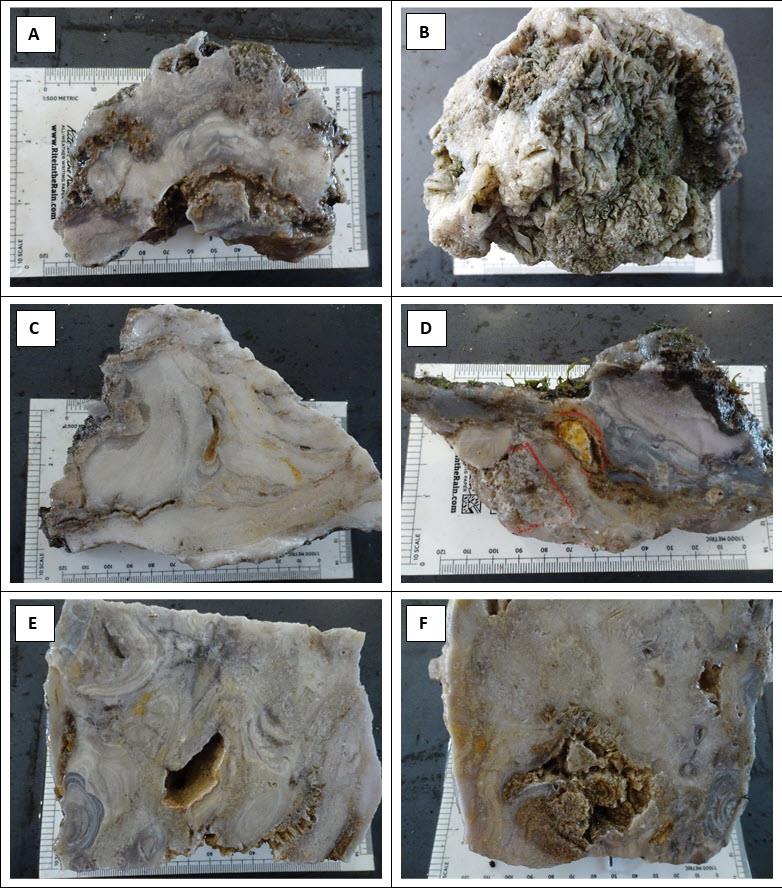\n\nFigure 5. Slabbed examples of epithermal quartz veins from the north east trending, +1,000m long portion of Rhyolite Ridge. (A) Coarse chalcedonic banding with minor quartz lattice bladed bands; (B) quartz lattice bladed textures after carbonate indicating that boiling has taken place; (C) Coarse chalcedonic banding with minor quartz lattice bladed bands; (D) Coarse chalcedonic banding with minor quartz lattice bladed bands circled in red (centre left) together with an included fragment of rhyolite circled in red (centre); (E) & (F) Typical low temperature textures reflecting a low fluid-flux environment of formation within upper levels of the upflow zone.\n\n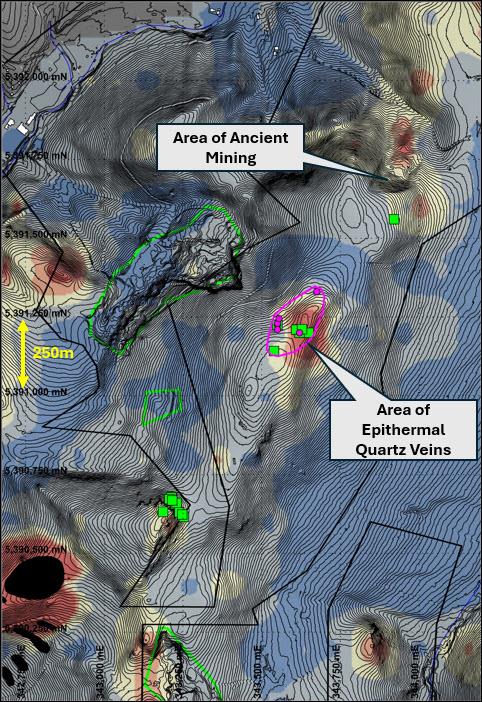\n\nFigure 6. Location of the area of ancient mining in relation to the area of epithermal quartz veins (purple circles). Green squares are locations of chalcedonic veinlets in rhyolite flow dome complexes, green outlines are bentonite open pits, solid black circles are the nearest outcropping sinters overlain on historic Sb soil geochemistry; 2m contours derived from LIDAR.\n\n1. **Chalcedonic Veinlets in Rhyolite Flow Dome Complexes**\n\nProspecting by the BULGOLD exploration team also revealed the presence of chalcedonic veins/veinlets within rhyolite flow dome complexes located at higher elevations, principally on Rhyolite Ridge, but also found throughout the property. Only within the area of epithermal quartz veins are the two types of veins found together. They are moderately anomalous for antimony (average of 85g/t Sb) with very low levels of Au, Ag and As and correlate well with the historic Sb soil geochemistry. Their significance is poorly understood at this stage (Figure 16).\n\n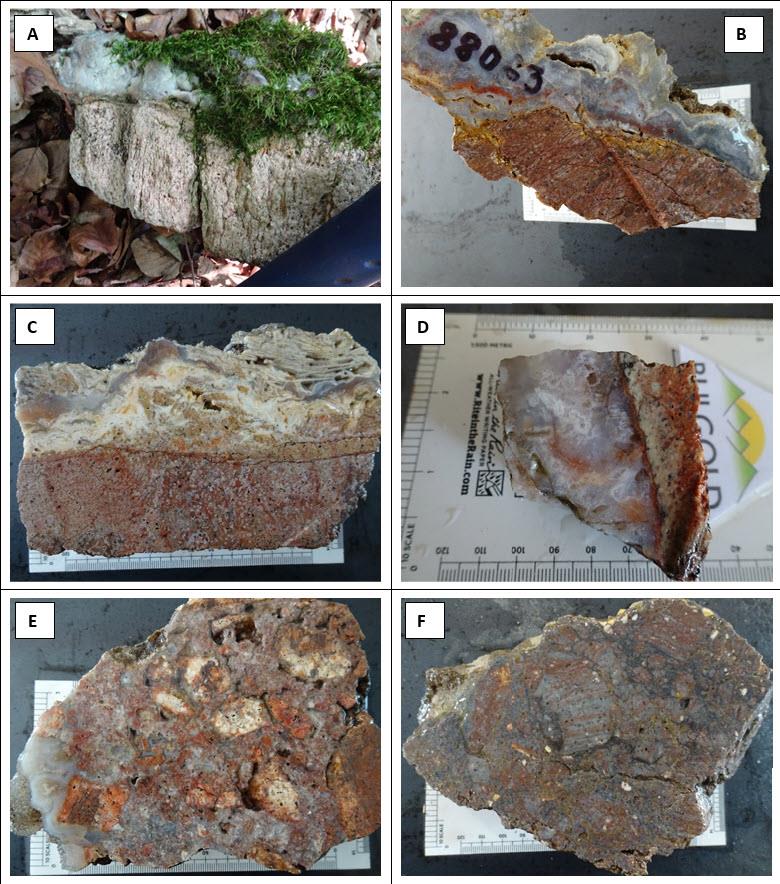\n\nFigure 7. Examples of chalcedonic veins within rhyolite rock located throughout the property. (A) Float sample in field; (B), (C) & (D) Crudely banded chalcedonic veins in rhyolite rock; (E) & (F) Brecciated rhyolite rock with chalcedony matrix infill.\n\n1. **Alteration & Mineralisation within the North East Block**\n\nAt surface, the North East Block is dominated by rhyolite ‘shingle’ float due to the abundance of flow banding within the rhyolite rocks in this area, however, below the 600mRL and more commonly around the 500mRL, altered and mineralised rhyolite rocks can be found as float in many areas. Figure 8 shows some examples of the float rock which represents a composite ‘stratigraphy’ from across the North East Block from low temperature alteration to low temperature gold mineralisation; these rocks are responsible for the extensive arsenic and antinomy anomalism as defined by historic soil sampling.\n\n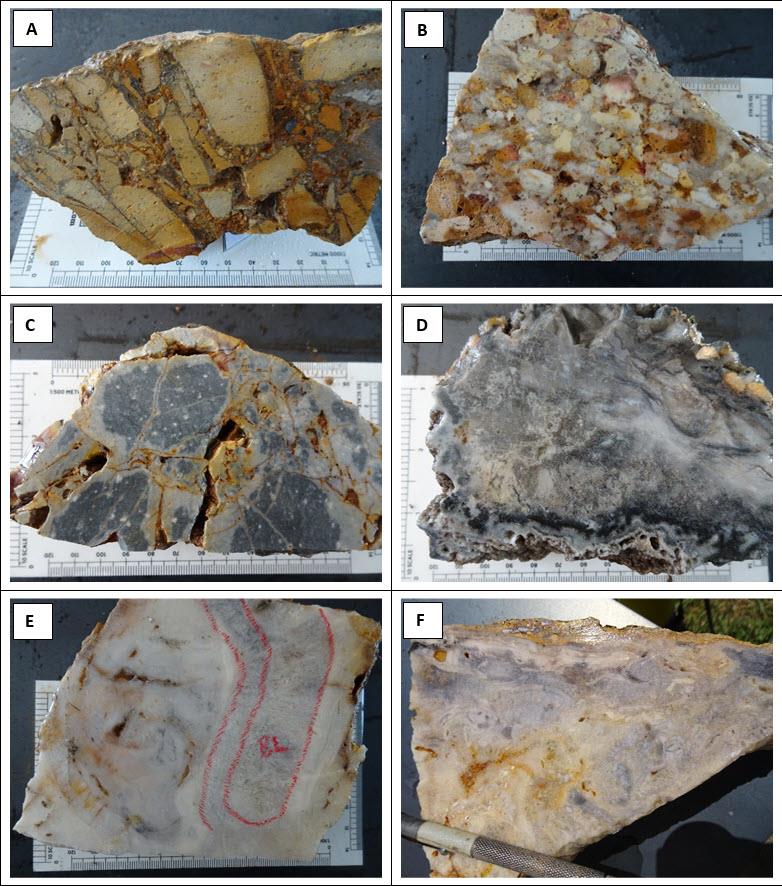\n\nFigure 8. (A) Brecciated rhyolite with chalcedony matrix infill often found at higher elevations (0.12% As, 179g/t Sb); (B) Silicified epiclastic volcanic breccia dominated by various rhyolite clasts (81.3g/t As, 35.6g/t Sb); (C) Silicified rhyolite rock with disseminated pyrite (381g/t As, 73.4g/t Sb); (D) Weakly developed chalcedonic quartz vein in rhyolite rock with pseudo moss textures and a radiating fabric (37.7g/t As, 961g/t Sb); (E) Coarsely banded chalcedonic quartz vein with quartz lattice bladed textures circled in red (0.81g/t Au, 5g/t Ag, 74.8g/t As, 26.6g/t Sb); (F) Chalcedonic quartz vein with coarse banding and minor quartz lattice bladed textures (0.58g/t Au, 5.9g/t Ag, 38.5g/t As, 44g/t Sb).\n\n1. **Sinters**\n\nAll sinters within the Sinter Field were mapped at 1:10,000 scale. The key finding from this exercise was that there is no preferred topographic level for the formation of sinters and they occur/outcrop at all topographic levels and are commonly ‘stacked’ in that they form significant sinter terraces, separated by tuff layers, across the property. The sinters show a strong correlation with antimony in the historic soil geochemistry (Table 2).\n\n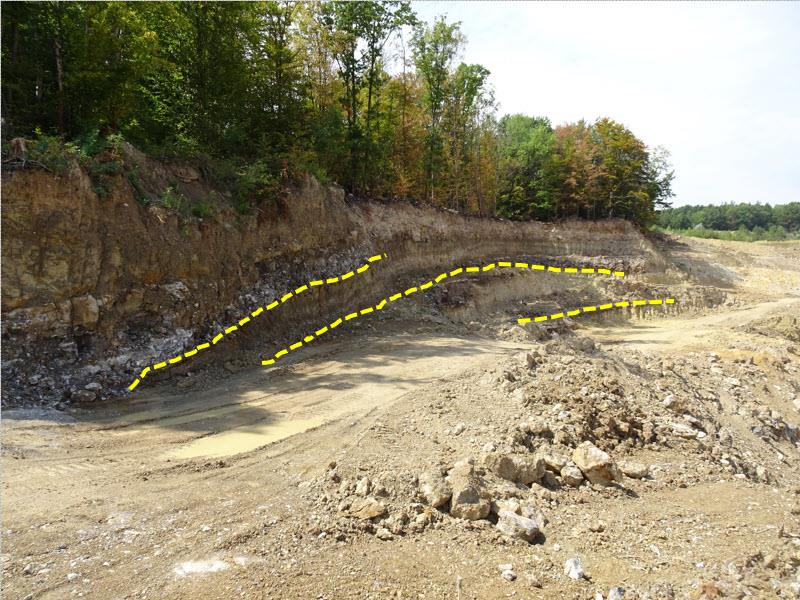\n\nFigure 9. Stacked sinters within the southern pit wall of the Jelsovy potok bentonite open pit separated by tuff layers. The yellow dashed line outlines the base of each sinter horizon.\n\nAdditionally, 69 samples were collected from the sinter outcrops ± minor float across the western side of Rhyolite Ridge. These samples were then slabbed in the Lutila core shed and a detailed hand specimen review was completed based on textural characteristics using the Atlas of Siliceous Hot Spring Deposits (Sinter) and Other Silicified Surface Manifestations in Epithermal Environments (Hamilton et al, 2019) as a guide to determine the likely temperatures of sinter formation (Figure 15).\n\nThis study revealed that sinters located on Rhyolite Ridge (at the highest elevations) reflect the highest temperatures of formation and therefore proximity to the “hot springs” or “outflow zones”, which continues to support the view that the 5km-long Rhyolite Ridge is one of the primary exploration targets on the Property. Additionally, a review of historic bentonite exploration drilling revealed many sinters which do not outcrop and occur subsurface (Figure 16).\n\n1. **Discussion**\n\nThe Lutila Gold Project is located favourably between two of the largest Au-Ag epithermal systems within the Central Slovakia Volcanic Field, the Kremnica gold deposit and the Banska Štiavnica gold-silver ore field, which collectively, have produced significant amounts of precious metals over many centuries. According to Kodera (2005) the Banska Štiavnica ore field has produced 2.6Moz Au and 129Moz Ag from the early middle ages until the twentieth century. The fact that low to intermediate sulfidation Au-Ag epithermal veins are intimately associated with rhyolite volcanism during the period 12.4 – 11.2Ma underpins the Company’s exploration model.\n\n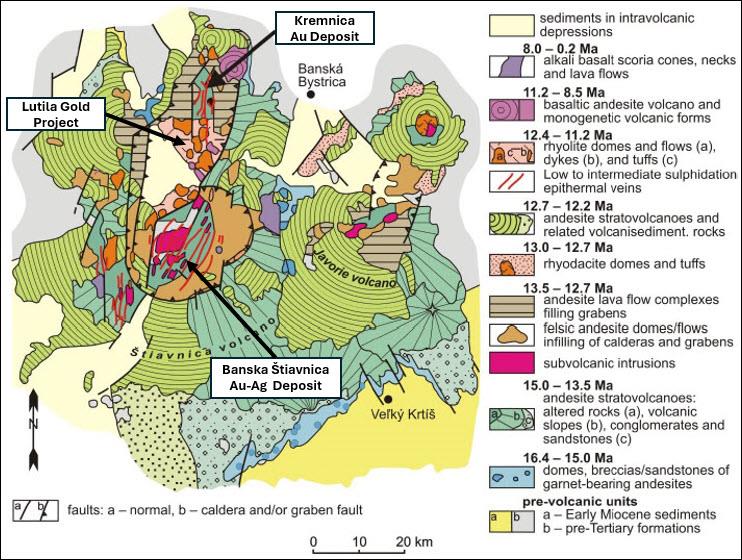\n\nFigure 10. Regional geological setting of the Lutila Gold Project in relation to adjacent ore districts within the Central Slovakia Volcanic Field (after Kodera et al, 2014).\n\nAt the nearby Kremnica gold deposit, which is hosted in andesite volcanic rocks, rhyolite dykes are intimately associated with and often well mineralised where they are cross-cut, or run parallel to quartz-adularia veins, thus indicating that extrusive rhyolite volcanism was likely a pre-mineral event. The historic exploration drilling has indicated that andesite volcanic rocks are present below the exposed rhyolite flow dome complexes and their associated pyroclastic products within the area of the North East Block and it is likely that andesite volcanic rocks are present beneath the rhyolite and lacustrine sedimentary rock stratigraphy currently determined within the Sinter Field. It should be noted that the formation of a significant epithermal system within the property is somewhat independent of host rock.\n\nHistoric soil sampling has outlined a significant, +7km long, paleo-geothermal system as defined by arsenic and antimony geochemistry. Historic and the Company’s rock chip sampling, which is biased to the North East Block, has shown that surface gold grades increase in value toward lower elevations, which is in line with the Company’s current geological model. Historic exploration drilling, which is also restricted to the North East Block, has shown that there are anomalous gold grades within the rhyolite flow dome complexes and their pyroclastic products on either flank of the Čertov vrch target area which is centred on the Čertov vrch peak (748mRL).\n\n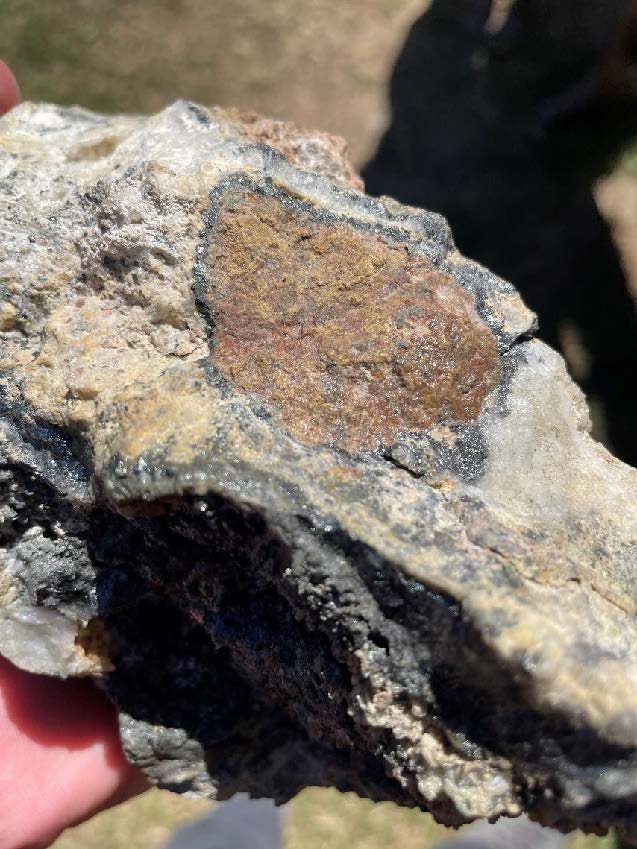\n\nFigure 11. Rhyolite clast surrounded by tetrahedrite within quartz-adularia vein from the northern portion of the Kremnica gold deposit (Kremnička Banya – Wolf Veins), Private Collection, Kremnica.\n\nThe Company believes that the Lutila Gold Project reflects a continuation of the same volcanic depression (that hosts the Kremnica gold mine), which has been downfaulted, creating a preserved graben of rhyolite flow domes complexes and their pyroclastic products together with a very large sinter field.\n\nField work completed by the Company during 2024, in conjunction with a thorough review of the historic exploration data (primarily within the North East Block), taken together with the extensive Sinter Field, which reflects the position of the Miocene paleosurface and is an indication of boiling at depth within an epithermal system which, if present, is preserved from erosion, would tend to strongly support the Company’s conceptual exploration model. The discovery of epithermal quartz vein material within the Sinter Field and the associated area of ancient mining have now shown, for the first time, that the Lutila Gold Project remains a highly prospective property for the discovery of epithermal quartz-adularia vein systems.\n\n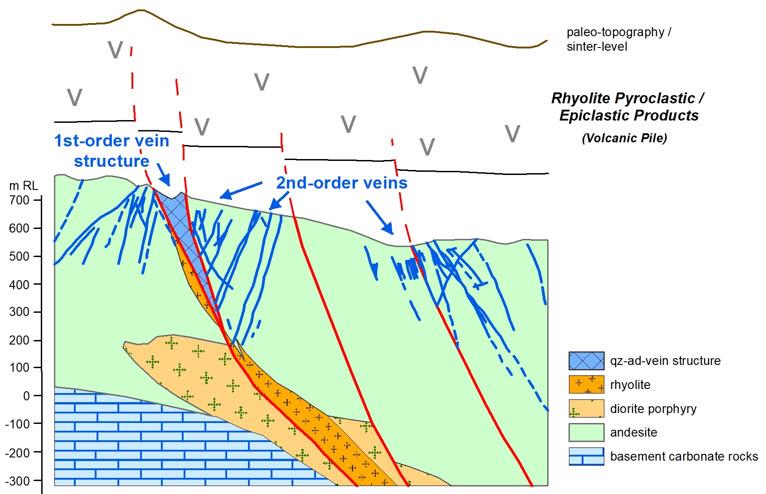\n\nFigure 12. Conceptual exploration model for the Lutila Gold Project. The Kremnica gold deposit schematic section is a composite section based on public domain information.\n\n1. **About the Slovak Republic**\n\n- EU and NATO member since 2004.\n\n- Eurozone member since 2009.\n\n- Established mining industry, clearly defined mining legislation.\n\n- No restrictions on foreign ownership.\n\n- 21% corporate tax rate.\n\n- 5% NSR for gold and silver.\n\n- The use of cyanide for extractive purposes has been prohibited since 2014.\n\n- Low-cost profiles, skilled local workforce.\n\n- Exploration licences can be held for a 10-year period (4+4+2).\n\n**References:**\n\n**_Finka, O.,_** **1995**. Zlatá Kremnica: Tisícročná história baníctva, Neografia vydavateľstvo, Monografie 71 pages (in Slovak).\n\n**_Hamilton AR., Campbell KA., Guido DM., 2019_**. Atlas of Siliceous Hot Spring Deposits (Sinter) and Other Silicified Surface Manifestations in Epithermal Environments. Lower Hutt (NZ): GNS Science 56 p. (GNS Science report; 2019/06.\n\n**_Kodera P., Lexa J., Rankin AH., Fallick AE., 2005._** Epithermal gold veins in a caldera setting: Banská Hodruša, Slovakia. Mineralium Deposita. 39: 921-943 **.**\n\n**_Kodera P., Lexa J., Fallick AE., Walle M., Biron A., 2014_** _._ Hydrothermal fluids in epithermal and porphyry Au deposits in the Central Slovakia Volcanic Field. Geological Society, London, Special Publications 2014, v.402; p177-206.\n\n**_Leary S., Sillitoe R., Stewart P., Roa K., Nicolson B., 2016_** **.** Discovery, Geology and Origin of the Fruta del Norte Epithermal Gold-Silver Deposit, Southeastern Ecuador. Economic Geology, Vol. 111, pp. 1043 – 1072.\n\n**About BULGOLD Inc.**\n\nBULGOLD is a gold exploration company focused on the exploration and development of mineral exploration projects in Central and Eastern Europe. The Company controls 100% of three quality quartz-adularia epithermal gold projects located in the Slovakian and Bulgarian portions of the Western Tethyan Belt: the Lutila Gold Project, the Kostilkovo Gold Project and the Kutel Gold Project. Management of the Company believes that its assets show potential for high-grade, good-metallurgy, low-sulfidation epithermal gold mineralisation.\n\n**_Historic Sampling and Drilling Data and Information_**\n\nThe historical sampling and drilling data and information disclosed in this news release is related to historical exploration results. The reader is cautioned that the historical sampling and drilling data and information are based on prior data and reports previously prepared by third parties without the involvement of the Company. Information has been sourced from the Slovak Geological Survey in reports 83971 (December 1997) and 92416 (February 2013). BULGOLD has not undertaken any independent investigation of the historical sampling and drilling data and information, nor has it independently analyzed the results of the historical sampling and drilling exploration work in order to verify the results. The reader is cautioned not to treat them, or any part of them, as current due to the fact that a qualified person has not done sufficient work to verify the results and that they may not form a reliable guide to future results. No independent quality assurance/quality control protocols are known for these historic samples and drill holes and therefore the analytical results, data and information may be unreliable. BULGOLD considers the historical sample and drill data and information to be relevant as BULGOLD is using this data and information, in conjunction with the sampling conducted by BULGOLD, as a guide to plan its exploration program for the Lutila Gold Project. BULGOLD’s current exploration work includes verification of the historical data and information through further exploration.\n\n**_Sampling, Analysis and QAQC of Exploration Drill Core Samples_**\n\nMost exploration diamond drill holes are collared with PQ size, continued with HQ, and are sometimes finished with NQ. Triple tube core barrels and short runs are used whenever possible to improve recovery. All drill core is cut lengthwise into two halves using a diamond saw; the right-hand half looking downhole is sampled for assaying and the other half is retained in core trays. The common length for sample intervals within mineralized zones is one metre. Weights of drill core samples range from three to eight kilograms (“kg”), depending on the size of core, rock type, and recovery. A numbered tag is placed into each sample bag, and the samples are grouped into batches for laboratory submissions.\n\nDiamond drill core samples are shipped to SGS Burgas, Bulgaria. Quality control samples, comprising certified reference materials, blanks, and field duplicates, are inserted into each batch of samples and locations for crushed duplicates and pulp replicates are specified. All drill core and quality control samples are tabulated on sample submission forms that specify sample preparation procedures and codes for analytical methods. For internal quality control, the laboratory includes its own quality control samples comprising certified reference materials, blanks and pulp duplicates. All QAQC monitoring data are reviewed, verified and signed off by the Company. Chain of custody records are maintained from sample shipments to the laboratory until analyses are completed and remaining sample materials are returned to the Company. The chain of custody is transferred from the Company to SGS at the laboratory door.\n\nAt the SGS Burgas laboratory, the submitted core samples are dried at 105°C for a minimum of 12 hours, and then jaw crushed to ~80% passing 2-6mm. Sample preparation duplicates are created by riffle splitting crushed samples on a 1-in-20 basis. Larger samples are riffle split prior to pulverizing, whereas smaller samples are pulverized entirely. Pulverizing specifications are 90% passing 75 microns. Gold analyses are done using a conventional 50-gram fire assay and AAS finish. Multi-element analyses for 36 elements are done using a four-acid digestion and an ICP-OES finish.\n\nBULGOLD’s issued and outstanding shares are 27,597,928 of which approximately 39.54% are held by Founders, Directors and Management. Additional information about the Company is available on BULGOLD’s website ( [www.BULGOLD.com](http://www.bulgold.com/)) and on SEDAR+ ( [www.sedarplus.ca](http://www.sedarplus.ca/)).\n\n**_Qualified Person_**\n\nThe scientific and technical information in this news release was reviewed and approved by Mr Sean Hasson, a Qualified Person as defined by National Instrument 43-101 and President and Chief Executive Officer to the Company.\n\n**_Neither TSX Venture Exchange nor its Regulation Services Provider (as that term is defined in the policies of the TSX Venture Exchange) accepts responsibility for the adequacy or accuracy of this release._**\n\n**_Cautionary Statement Regarding Forward-Looking Information_**\n\nThis press release contains forward‐looking statements and forward‐looking information within the meaning of applicable securities laws (collectively, “forward-looking statements”). These statements relate to future events or future performance and include statements relating to the exploration and drilling plans of the Company and the timing thereof; the Lutila Gold Project and the status of the Lutila Gold Project as a strong early-stage gold project in Europe; the Kremnica gold mine and the reason for the Kremnica gold mine being exploited over a long period of time; the Lutila Gold Project reflecting a continuation of the same Kremnica volcanics; the Company’s conceptual exploration model for the Lutila Gold Project’ the potential of the Lutila Gold Project to benefit the Company’s stakeholders; the mineralised inventory within the Kremnica deposit through time; the targeted upflow zone drilling at Rhyolite Ridge target; and the potential drill success on the Rhyolite Ridge target area and the impact thereof on future exploration. All statements other than statements of historical fact may be forward‐looking statements or information. The forward‐looking statements and information are based on certain key expectations and assumptions made by management of the Company. Although management of the Company believes that the expectations and assumptions on which such forward-looking statements and information are based are reasonable, undue reliance should not be placed on the forward‐looking statements and information since no assurance can be given that they will prove to be correct.\n\nForward-looking statements and information are provided for the purpose of providing information about the current expectations and plans of management of the Company relating to the future. Readers are cautioned that reliance on such statements and information may not be appropriate for other purposes, such as making investment decisions. Since forward‐looking statements and information address future events and conditions, by their very nature they involve inherent risks and uncertainties. Actual results could differ materially from those currently anticipated due to a number of factors and risks, including the inherent uncertainty of mineral exploration; risks related to title to mineral properties; and changes in laws or regulations, including environmental laws and regulations; and credit, market, currency, operational, commodity, geopolitical, liquidity and funding risks generally, including changes in economic conditions, interest rates or tax rates and general market conditions. Accordingly, readers should not place undue reliance on the forward‐looking statements and information contained in this press release. Readers are cautioned that the foregoing list of factors is not exhaustive. The forward-looking statements and information contained in this press release are made as of the date hereof and no undertaking is given to update publicly or revise any forward‐looking statements or information, whether as a result of new information, future events or otherwise, unless so required by applicable securities laws. "]
- Leadership
- Management: Mr. James Crombie Executive Chairman and Non-Independent Director James Crombie graduated from the Royal School of Mines, London, in 1980 with a Bachelor of Science (Honours) in mining engineering, having been awarded the Anglo American scholarship. Mr. Crombie held various positions with DeBeers Consolidated Mines and the Anglo American Corporation in South Africa and Angola between 1980 and 1986. He spent the following 13 years as a mining analyst and investment banker with Shepards, Merrill Lynch, James Capel & Co. and finally with Yorkton Securities. Mr. Crombie has over 20 years serving as management and/or board member to several public mining companies listed on the Toronto Stock Exchange or the TSXV in Canada, in Australia and in the United Kingdom. Mr. Crombie was Vice President, Corporate Development of Hope Bay from 1999 to 2002, President and Chief Executive Officer of Ariane Gold Corp. from 2002 to 2003, President, CEO and Director of Palmarejo until the merger with Coeur d’Alene Mines Corporation in 2007, President, CEO and Director of Avala Resources Ltd., Dunav Resources Ltd. and Reunion Gold Corporation, and Director of Torex Gold Resources Inc. and Ariane Silver Corporation. Mr. Crombie is currently the Chief Executive Officer of Odyssey Resources Limited, a Canadian company trading on the NEX trading board of the TSXV and a non-executive director of Nickel Mines Limited, an Australian listed company. Mr. Sean Hasson President, Chief Executive Officer and Non-Independent Director Mr. Sean Hasson commenced working on the West Australian gold mines when he was nineteen years of age and since then has had extensive experience in exploration and project development management, quality control program management and corporate development activities. Sean has previously worked in both exploration and mining capacities on Archean greenstone gold and base metal projects in Western Australia, northern Canada and Finland and has had extensive exposure to epithermal and porphyry environments in South America, the Philippines and more recently in the Western Tethyan belt of Eastern Europe where he has been involved in the discovery and definition of 7.2Mozs Au and 1.4Mt Cu (NI 43-101) for various projects over the last twenty years. Sean graduated from the University of Western Australia with a Bachelor of Science (Geology Major). Sean resides in Sofia, Bulgaria and is a Member of the Australian Institute of Geoscientists (AIG), and a qualified person for the purposes of National Instrument 43-101. Mr. Jeff Pennock Chief Financial Officer Mr. Jeff Pennock has over 35 years of business experiences in multiple industries with experience in Canada, Europe and Africa. He has earned both Canadian and US Accounting designations. Mr. Pennock has approximately 20 years of leadership success with various companies in the mining and exploration sector. Since 2005 until 2020, Mr. Pennock has worked in the role of a corporate controller, finance director and VP Administration for Dundee Previous Metals. Mr. Danko Zhelev Chief Geologist Mr Danko Zhelev has extensive exploration and project development experience within Bulgaria and the Balkan region. Danko was part of the team that initially discovered the Ada Tepe gold deposit (Krumovgrad) during 2000 and subsequently was involved with all aspects of resource development, feasibility and permitting of the project in his former position as Exploration Manager, Bulgaria for Dundee Precious Metals. Mr. Demetrios Constantinides Managing Director – Slovakia Demetris is a Cypriot, who graduated from Charles University of Prague with a first-class MSc (Hons) degree in Geology in 1971, whilst he completed a PhD at the same University in 1973. Demetris worked for 25 years as an exploration geologist and for 5 years as Director of Public and International Relations at the Greek Institute of Geology and Mineral Exploration (IGME). He was the person in charge of the teams that discovered the Molaoi VMS deposit, Aisimi mixed sulphides prospect, the strata-bound mineralisation at Marlou of Thassos island and other resources of base and precious metals in Greece. He represented IGME in various bodies of the European Union and EuroGeoSurveys. From 1998 to 2016, Demetris held various managerial positions at Thrace Minerals Plc, EMED Mining Plc, EMED Slovakia Ltd and Atalaya Mining Plc. Demetris was in charge of the companies that discovered the Sappes Gold Deposit in Greece and the Biely Vrch Gold Deposit in Slovakia. Furthermore, he was the co-ordinator of the technical teams that prepared the final reports, which led to the reopening of the Rio Tinto mine in Andalusia. Rio Tinto mine’s production in 2021 exceeded 56,000 tons of copper. Presently, he is an advisor to Eastern Resources Plc on exploration projects in the Slovak Republic and Director at the Cypriot Company Venus Minerals Plc. Demetris was Thrace Minerals’ and EMED Mining’s representative in EuroMines. From 2011 to 2014 he was first the Vice-chairman and then the Chairman of Euromines’ Communication Committee. Demetris has published more than 200 articles in scientific journals, newspapers and special publications. Mr. Andrew Newbury Corporate Secretary Andrew has 15 years of corporate secretarial, administrative, financial, and operational experience at a variety of small businesses. He has served as Corporate Affairs Manager for junior mineral exploration companies, Logistics Manager for a mineral exploration consulting firm, and as a Sales Administrator and Controller at a yacht dealership. Andrew joined DSA Corporate Services in 2017, and as a Senior Account Executive he provides Corporate Secretarial consulting services for 25 small to mid cap issuers on the TSX, TSX-V, and CSE. Andrew has a Bachelor of Commerce degree from Dalhousie University and is a student-member of the Institute of Chartered Secretaries and Administrators (ICSA). Directors: Dr. Mihaela Maria Barnes, Independent Director Chair of the Environmental, Social, Governance & Nominating Committee, Member Audit & Risk Committee Dr. Mihaela Maria Barnes earned her Ph.D. in International Law from the Graduate Instituteof International and Development Studies, Geneva. She also holds an LL.M. in International and European Law (specialization: International Trade and Investment Law) from theUniversity of Amsterdam as well as undergraduate degrees, legal qualifications and experience in both common law and civil law. Dr Barnes was a Visiting Fellow at the Lauterpacht Centre for International Law, University of Cambridge and a member of the Coordinating Committee of the European Society of International Law Interest Group on Business and Human Rights. She has published extensively in peer-reviewed journals on various topics of international law, business and human rights and sustainability. A revised version of her Ph.D. dissertation (State-Owned Entities and Human Rights: The Role of International Law) was published by Cambridge University Press in November 2021. Dr Barneshas acted as a consultant on matters of corporate governance, business and human rights, sustainability and international law. Ms. Vanessa Cook Independent Director, Chair of the Audit and Risk Committee, Chair of the Compensation Committee Ms. Vanessa Cook is a CPA, CA with over 22 years of business experience in accounting and finance. Ms. Cook graduated from Dalhousie University with a Bachelor of Commerce degree. Since then, she has worked with a variety of public and private companies in the mining, insurance, risk consulting, and technology industries, which have included the roles of Controller, Director of Finance, and Vice President of Finance. Ms. Cook spent nine years combined in financial reporting at Dundee Precious Metals and Corsa Coal. She is currently the Vice President Finance at Navacord Corp., a privately owned insurance brokerage. Mr. Colin Jones, Independent Director Member Compensation Committee Mr. Colin Jones has over 40 years’ experience as a mining, exploration and consulting geologist. He is experienced in a number of different geological environments and has worked on all continents on producing mines, as part of feasibility teams and as an explorationist. Colin has managed large exploration and due diligence projects, and has undertaken numerous bankable technical audits, technical valuations, independent expert reports and due diligence studies worldwide, most of which were on behalf of major international resource financing institutions and banks. Colin resides in New Zealand and acts as Technical Adviser to a number of other resource investment groups, primarily Orimco Pty. Ltd. in Perth. Colin was formerly Principal and Manager Audits with RSG Global based in Perth. More recently Colin was Executive Vice President with Dundee Resources Ltd. based in Toronto. Mr. Laurence (Laurie) Marsland, Lead Independent Director Member Audit & Risk Committee, Member Environmental, Social, Governance & Nominating Committee Mr. Laurie Marsland is a graduate of the Western Australia Institute of Technology where he completed a Bachelor of Applied Science in Mechanical Engineering and attended the Stanford Sloan Fellows Program at the Stanford University Graduate School of Business where he completed a Master of Science in Management degree. Mr. Marsland is a Fellow of the Institution of Engineers Australia, a Chartered Professional Engineer and has forty years of diverse international experience in mining project evaluation, development, and operations. He has undertaken various roles including Chief Executive Officer, Chief Operating Officer, Vice President Project Development and Director. He relocated to Sofia, Bulgaria where in 2004 he assumed the role of Chief Operating Officer for Dundee Precious Metals. Mr. James Crombie, Executive Chairman and Non-Independent Director Member Compensation Committee James Crombie graduated from the Royal School of Mines, London, in 1980 with a Bachelor of Science (Honours) in mining engineering, having been awarded the Anglo American scholarship. Mr. Crombie held various positions with DeBeers Consolidated Mines and the Anglo American Corporation in South Africa and Angola between 1980 and 1986. He spent the following 13 years as a mining analyst and investment banker with Shepards, Merrill Lynch, James Capel & Co. and finally with Yorkton Securities. Mr. Crombie has over 20 years serving as management and/or board member to several public mining companies listed on the Toronto Stock Exchange or the TSXV in Canada, in Australia and in the United Kingdom. Mr. Crombie was Vice President, Corporate Development of Hope Bay from 1999 to 2002, President and Chief Executive Officer of Ariane Gold Corp. from 2002 to 2003, President, CEO and Director of Palmarejo until the merger with Coeur d’Alene Mines Corporation in 2007, President, CEO and Director of Avala Resources Ltd., Dunav Resources Ltd. and Reunion Gold Corporation, and Director of Torex Gold Resources Inc. and Ariane Silver Corporation. Mr. Crombie is currently a non-executive director of Nickel Industries Limited, an Australian listed company. Mr. Sean Hasson, President, Chief Executive Officer and Non-Independent Director Member Environmental, Social, Governance & Nominating Committee Mr. Sean Hasson commenced working on the West Australian gold mines when he was nineteen years of age and since then has had extensive experience in exploration and project development management, quality control program management and corporate development activities. Sean has previously worked in both exploration and mining capacities on Archean greenstone gold and base metal projects in Western Australia, northern Canada and Finland and has had extensive exposure to epithermal and porphyry environments in South America, the Philippines and more recently in the Western Tethyan belt of Eastern Europe where he has been involved in the discovery and definition of 7.2Mozs Au and 1.4Mt Cu (NI 43-101) for various projects over the last twenty years. Sean graduated from the University of Western Australia with a Bachelor of Science (Geology Major). Sean resides in Sofia, Bulgaria and is a Member of the Australian Institute of Geoscientists (AIG), and a qualified person for the purposes of National Instrument 43-101. Technical Advisory Board: Mr. Brett Davis Brett is widely regarded in the exploration and mining industry for his application of applied structural geology to numerous commodity types and mineral deposit styles. The approach Brett has brought to understanding mineralising environments globally is a product of the integration of modern structural geology and techniques married with several decades of applied research. Brett received a structural geology PhD (1992) from James Cook University. This was followed by six years of applied structural geological postgraduate research before returning to the minerals industry in 1998. Here he held various technical and senior managerial roles at consultancy groups and in mining and exploration companies prior to running his own international geology consultancy. Brett currently holds an Adjunct Senior Research Fellow position at James Cook University. Mr. Mathias Knaak Mr. Knaak received a MSc in geology from the RWTH Aachen University (1993) and a MSc in Economic Geology from the Key Centre for Strategic Mineral Deposits at the University of Western Australia (1998). During the period from 1994 to 1999, Mr. Knaak worked as an exploration geologist for Aurifex Mining NL, Poseidon Gold Ltd and Great Central Mines NL in Western Australia and for Equinox Resources NL and Geosurveys Australia Pty Ltd in South Australia and Zambia. In 2008, Mr. Knaak joined Dundee Precious Metals as the Principal Consulting Geologist, working in Serbia, Bulgaria and Armenia on porphyry copper, gold and molybdenum projects as well as sediment-hosted gold exploration projects. Subsequently, he worked for state geological surveys in Germany and as a consultant to the mining industry in Serbia and Bulgaria with emphasis on structural aspects of sediment-hosted gold and high- and low-sulfidation epithermal precious metal exploration projects. Mr. Knaak is an internationally experienced consulting geologist specialising in mineral exploration, prospect and mine evaluation, geological mapping and structural interpretation. He has initiated, implemented, and managed numerous cross-disciplinary mapping campaigns on early-stage to resource definition stage precious and base metal exploration projects. He has over twenty-eight years of hands-on field-based and research experience in exploration and mining geology relating to exploration/development project management, project generation, exploration geochemistry, project scheduling and budgeting, together with quality control program management. Mr. Richard Tosdal Richard Tosdal received a Bachelor’s degree from the University of California, a M.Sc. from Queen’s University and a Ph.D. from the University of California at Santa Barbara. He worked for the U.S. Geological Survey (1978 to 1999) and was the Director of the Mineral Deposit Research Unit at the University of British Columbia (1999 through 2008). He currently consults to the minerals industry on aspects regarding the metallogenic evolution of plate margins, the structural controls on ore deposition, and evolution of a range of hydrothermal deposits. He serves on technical advisory boards to junior mining companies, is active in facilitating industry designed R&D projects and retains an adjunct appointment at the University of British Columbia. Mr. Joe Crummy Joe Crummy is holder of a BSc in Applied Geology from the University of Strathclyde, Scotland and a PhD in gold metallogeny from Glasgow University, Scotland. He has over 25 years’ experience in mineral exploration worldwide and extensive experience within Central and Eastern Europe. Joe currently combines regional, early-stage exploration work together with Acid Rock Drainage assessment and modelling on feasibility studies and mine development projects, again worldwide but mainly in the Balkans. Joe resides in Sofia, Bulgaria.
Verified data last updated:
Recent filings
- News release · zlto_2026-10-15_10-05-38.pdf
- News release · zlto_2026-10-07_10-35-30.pdf
- News release · zlto_2026-10-02_13-46-48.pdf
- News release · zlto_2026-09-29_10-35-30.pdf
- News release · zlto_2026-08-21_10-47-43.pdf
- 52-109FV2 - Certification of interim filings - CEO (E) · zlto_2026-08-21_10-30-38.pdf
- MD&A · zlto_2026-08-21_10-29-37.pdf
- Interim financial statements/report · zlto_2026-08-21_10-28-07.pdf